Plan pet travel around the actual animal, route and destination. Transport operators, accommodation providers and border authorities have different requirements, and a general guide cannot confirm a booking. Keep written confirmations and check again close to departure.
Prepare the vehicle and equipment
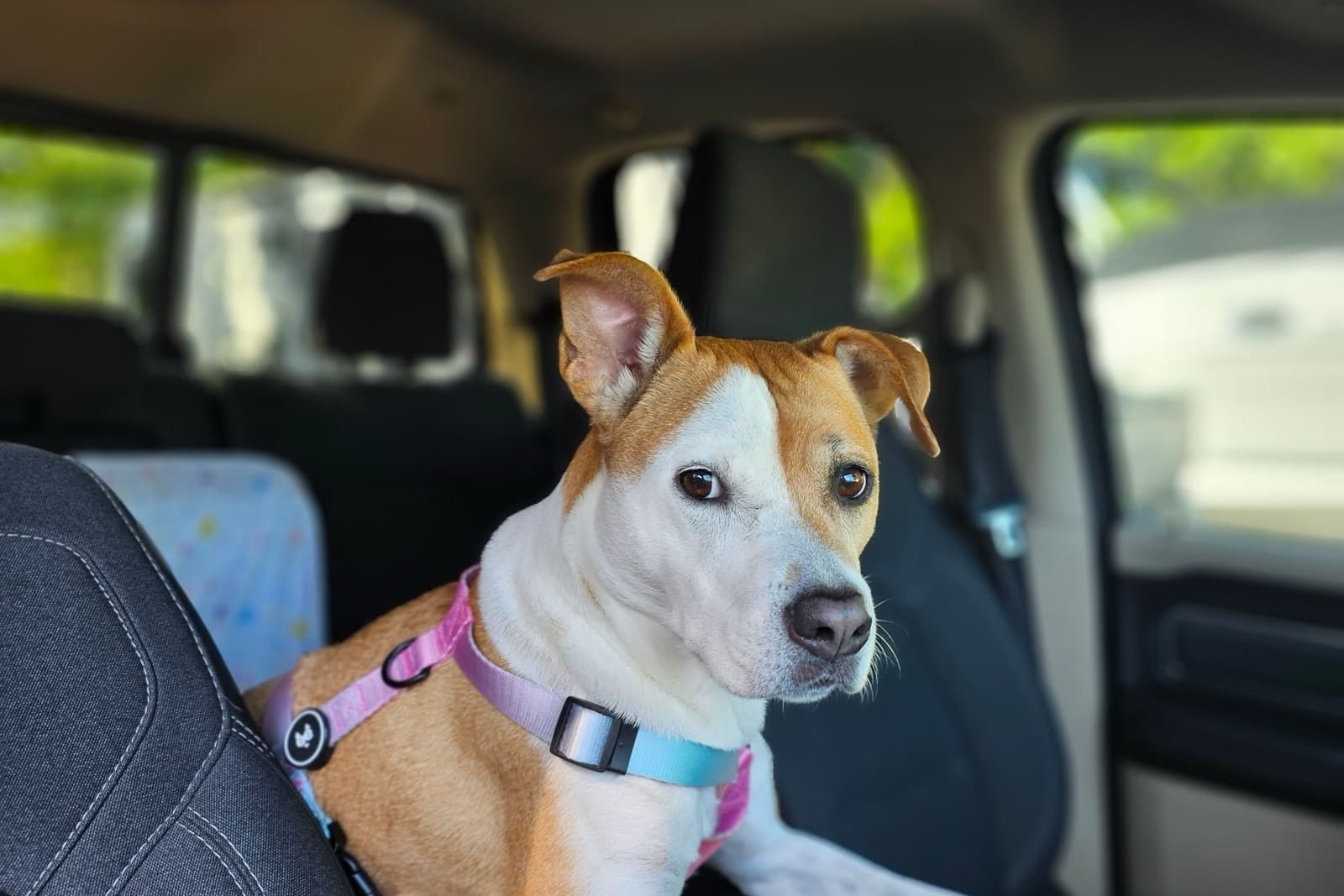
The CFIA's transport guidance recommends containing animals during travel and securing carriers or suitable restraints. Choose equipment for the animal and vehicle, and follow its fitting and securing instructions. A product labelled for travel is not automatically crash-tested.
Keep ventilation, access to water and safe stops in the plan. Do not leave an animal unattended in a parked vehicle. Ask the veterinarian about fitness to travel, anxiety or medication needs; do not improvise a sedative or borrow a prescription.
Pack familiar food, bowls, hygiene supplies, identification and any prescribed medication with its instructions. Allow for delays rather than counting on reaching a retailer or clinic at exactly the planned time.
Confirm accommodation in writing
“Pet friendly” is a starting point, not a complete policy. Ask about species, number, size limits, fees, room restrictions and whether the animal may be left alone. Save the answer with the booking. If the itinerary includes several properties, repeat the check for each one.
For campsites, parks and beaches, read the destination's own current access and leash rules. Do not assume national, provincial and municipal sites follow the same policy. Ask about any seasonal closures before building the day around a location.
Ask the operator about the whole route
Before booking a flight, ferry, train or bus
- Is this animal accepted on every leg and connection?
- Does the animal need a separate reservation?
- What are the exact carrier and handling requirements?
- What documents are required, and how recently must they be issued?
- What fees, seasonal restrictions or temperature limits apply?
- What happens if a departure changes, is delayed or is cancelled?
- How will the animal travel to and from the terminal?
Use the carrier's official policy and terms for the route and date. This guide gives no carrier-specific dimensions or fees, because a rule from one operator cannot be treated as permission from another.
Check any international border separately
A trip that crosses the United States or another country has import and return requirements beyond the accommodation and transport rules. The CFIA pet portal helps establish Canadian requirements. Check the destination country's official rules too, including any requirements for returning to Canada. Do not assume an ordinary vaccination record alone is sufficient.
Keep records and help reachable
Carry a concise veterinary history, current prescriptions and your regular clinic's contact details. Identify a clinic and an after-hours option near the destination and confirm their current arrangements. If you have insurance, ask about care away from home and the documents needed for a claim; policy terms decide eligibility.
Check identification contacts with the relevant registry or distributor and update visible tags. Keep current photographs. If separation occurs, contact local animal services and search promptly.
Leave room for changes
Weather, closures and cancellations can change the journey. Keep supplies and accommodation options for a delay. For a permanent relocation, the moving checklist covers housing, local rules and record transfer.
The travel community category is currently available to browse; member posting and replies are not available yet. Confirm operational rules with the responsible provider rather than relying on a planned community feature.